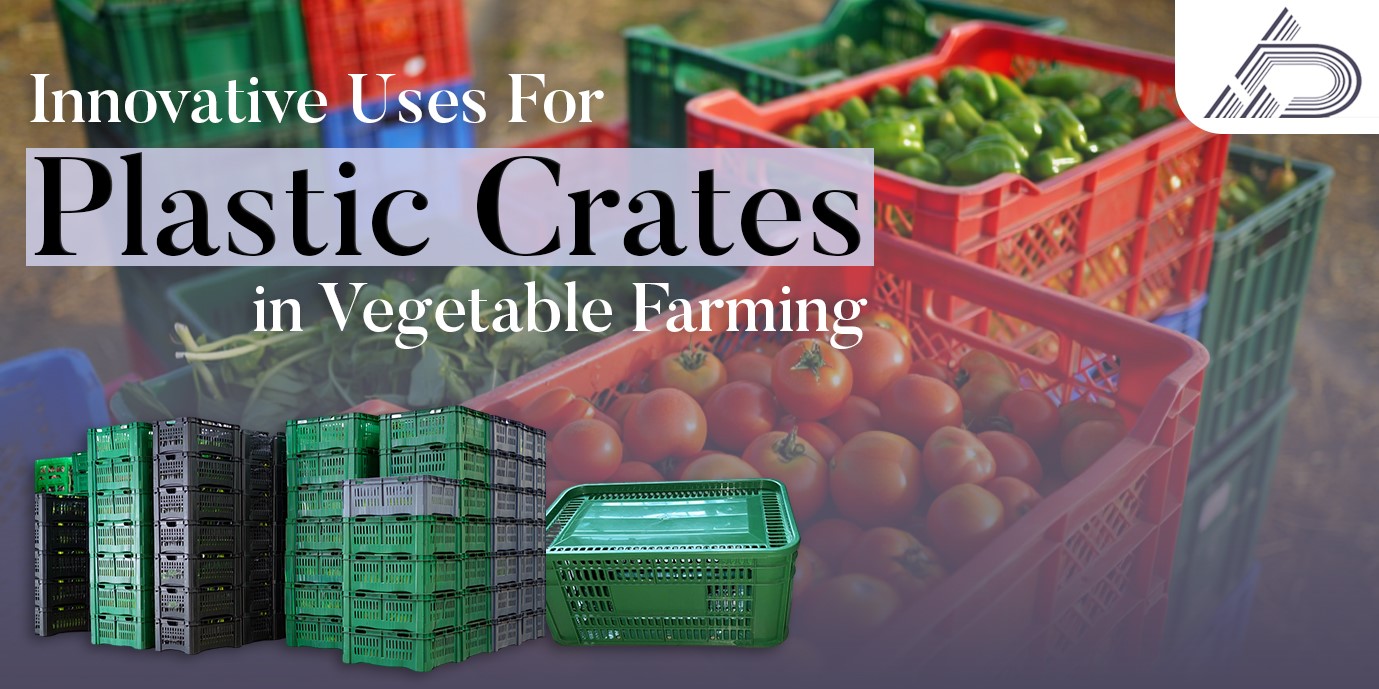
The face of the agricultural industry has been undergoing a revolutionary transformation from the conventional wooden crates to more sustainable and hygienic plastic crates. At the center of this paradigm shift are the Plastic Vegetable Crates. Farmers and distributors have always been faced with the daunting task of ensuring the quality of the produce from the farms to the tables of the consumers.
In this blog post, we shall examine the various ways in which innovative vegetable farmers are utilizing the plastic storage crates to enhance their efficiency. We shall also examine the benefits of using special containers for the harvest, the space-saving wizardry of the collapsible plastic crates, and the importance of buying from the best plastic crates manufacturers. Whether you are a small-scale farmer or a large-scale farmer, it is imperative to understand the innovative uses of the plastic storage crates to enhance your business.
Optimizing the Harvest with Plastic Vegetable Crates
The primary purpose of a crate in farming is, of course, the harvest. Yet, "innovative use" implies that the crate must be used in more than just carrying items. The Standardized Plastic Vegetable Crates in Pune offer the opportunity to develop a system in farming that has not been possible in the past with the irregularity of wicker or wooden baskets.
Field-to-Cold-Room Seamless Transition
Unlike wood, which is absorbent and may harbor bacteria and fungi, HDPE crates are non-porous. This helps farmers to:
- Pre-sort in the field: Farmers can sort vegetables according to size or quality directly into color-coded crates.
- Hydro-cooling: The crates can be immersed in water or sprayed with water immediately after harvest to cool the vegetables, which is essential for the preservation of leafy green vegetables.
- Ventilation control: The porous walls of the crates ensure that the vegetables are ventilated evenly, thus preventing the buildup of ethylene gas, which causes vegetables to over-ripen or decay.
Precision Logistics and Stacking
One of the most innovative applications of these crates is as a measuring tool. Knowing the exact weight of the standard crate, farmers can estimate the weight of the yield without having to weigh every single crate, thus speeding up the process of loading the transport trucks.
The Space-Saving Efficiency of Collapsible Plastic Crates
In the world of logistics, "deadhead" miles, the return trip when the truck is empty, can be quite costly. This is where the innovation of collapsible plastic crates really makes an impact on the world of vegetable farming.
Maximizing Warehouse and Transport Volume
If these crates are left empty, they can be folded down to a fraction of their original size. There are several advantages to this:
- Return Logistics: Instead of using 500 crates to transport tomatoes, the truck can return with 2,500 collapsed crates, greatly minimizing the carbon footprint and fuel costs of the return trip.
- Seasonal Storage: Because farming is a seasonal business, thousands of crates can be stored in a small corner of a shed during the off-season rather than taking up valuable floor space.
- Quick Assembly: Because of modern design, these crates can feature "active lock" systems, where a worker can snap a crate into its rigid form in under two seconds.
Vertical Farming Applications
These crates are being utilized as a "modular planting bed" in innovative urban and vertical farms. These crates are stackable and provide excellent drainage, making them ideal for use in hydroponic or aeroponic systems for growing microgreens or herbs, which can be arranged in a highly flexible manner.
Why Choosing the Right Plastic Crates Manufacturers Matters
Not all plastic is made equal. The quality of your produce also depends on the engineering of the plastic container. Working with the right plastic crates manufacturers ensures that the quality of the product meets the required standards.
Material Integrity and Food Safety
The best manufacturers will be using virgin HDPE or PP (Polypropylene) that is UV-stabilized. This is critical for vegetable production because:
- Chemical Stability: The plastic will not leach chemicals into the vegetables, even in the hot sun.
- UV Resistance: Lower-quality vegetable crates will become brittle and break when exposed to sunlight; high-quality crates will last for years when exposed to the elements.
- Ergonomics: Better manufacturers will have designed their crates with smooth handles and rounded corners to avoid injury to farm workers and damage to the vegetables themselves.
Customization for Specific Produce
Manufacturers have crates designed specifically for certain types of produce. For example:
- Shallow Crates: For berries and tomatoes to avoid "crushing" of the produce by the weight of the top layers.
- Deep Crates: For hardy vegetables such as potatoes and carrots.
- Reinforced Bases: For heavy vegetables such as cabbage and pumpkins to avoid the bottom sagging when lifted by machines.
Creative Repurposing on the Farm
Innovation doesn’t end at transportation. Farmers have discovered “secondary uses” for their crates that can save them money on infrastructure costs:
- Seedling Trays: Using smaller crates to organize and transport seedling pots in the greenhouse.
- Curing Stations: Ideal for drying onions and garlic because of the high airflow through the mesh sides.
- Temporary Fencing or Tool Storage: When no longer needed for produce, the ruggedness of these crates makes them ideal for organizing irrigation components or hand tools.
Frequently Asked Questions
Good-quality food-grade plastic crates, when properly maintained and UV stabilized, can last between 5 to 10 years, even when subjected to heavy daily usage. This is much more economical than the wooden crates, which may break within a single season.
Yes, modern engineering has enabled the collapsible crates to withstand considerable vertical weight. They do have a weight limit, but the crates stacked on top of one another are meant to be fully loaded.
Since plastic crates are non-porous, they can be sanitized using high-pressure water or steam cleaning. This is a huge advantage in attaining GlobalGAP or other food safety schemes.
Yes. Most reputable manufacturers use 100% recyclable HDPE. Some manufacturers even have "buy-back" schemes where they collect old, broken crates and re-manufacture them into new ones by grinding them down.
Conclusion
The simple plastic crate has been transformed into a high-tech solution that meets the most critical needs of today's farmer: hygiene, efficiency, and eco-friendliness. By incorporating Plastic Vegetable Crates into your business, you can be sure your products will arrive at the market in the best possible condition. In addition, the use of collapsible plastic crates is a forward-thinking solution that will save you space and money. Investing in quality equipment from reliable plastic crates manufacturers is an investment in your farm's future. Are you ready to take your harvest and transport to the next level?